

PTSD & Trauma Treatment in Littleton, Colorado
What happened to you was real, and so is what it left behind. Trauma-informed care here means one thing above all: you stay in control, and we go at your pace through every step and every session.
Your Options at a Glance
Littleton, CO 80128 · Telehealth across ColoradoYou’re Not Broken
When part of you is still standing guard
Trauma has a way of outstaying the event itself. The body stays braced: scanning rooms, startling at sounds, sleeping with one eye open. Nights bring nightmares or the same unwanted memories on a loop. Or the opposite happens: a numbness settles in, a glass wall between you and the people you love, and you wonder if you’ve been permanently changed.
And then there’s the self-blame: the quiet, corrosive question of why can’t I just move on? But trauma changes the nervous system. What you’re experiencing is not weakness or a failure of will. It’s a protective system that hasn’t gotten the message that the danger has passed. Care can move at your pace, and beginning treatment does not require recounting every detail of what happened.
It may be time to reach out if…
- Intrusive memories or nightmares keep returning
- You avoid places, people, or situations that stir reminders
- You’re always on guard or easily startled
- Emotional numbness or detachment keeps you at a distance from your own life
- Sleep is disrupted: hard to fall into, hard to stay in
- Guilt or shame sits with you and won’t lift
A note from Dr. Wagner
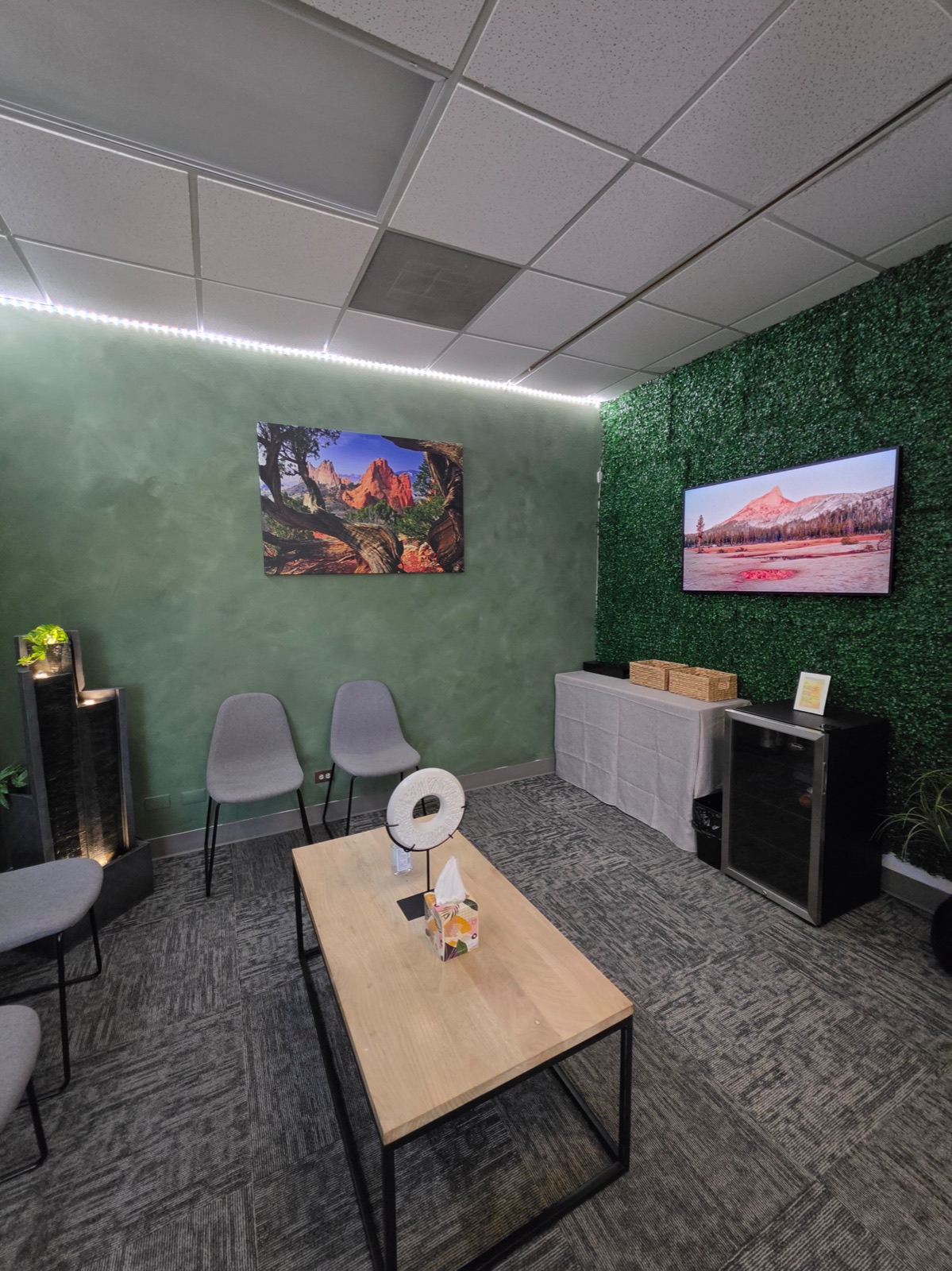
“Safety and security are inherent needs of each individual. Trauma can disrupt the part of the mind that allows us to feel grounded, leading to a constant edge that can be intrusive, destabilizing, or even destructive to our own self. At this clinic, we will prioritize creating a space of safety and meet you wherever you may be in your journey of recovery.”
Your Options
Trauma care built around safety and choice
There is no single right path through trauma, so we offer several, and you choose the pace.
Therapy, Coordinated
Trauma-informed talk therapy starts with stabilization and safety, helping your nervous system unlearn constant alarm at a pace you control. We refer you to trusted trauma therapists and coordinate care with them.
Medication Management
Evidence-based options that ease specific PTSD symptoms (sleep, nightmares, mood, the constant sense of threat), prescribed carefully and reviewed often.
How we prescribeIV Ketamine Therapy
An off-label option with emerging evidence for trauma-related conditions. Every candidate is carefully screened, and every infusion is administered and monitored by our medical team.
How IV ketamine worksNot sure where to start?
That’s okay; most people aren’t. A comprehensive evaluation with Dr. Wagner sorts out what you’re carrying, including the anxiety and depression that often travel with trauma, and maps a plan you feel safe with. If you already have a therapist you trust, we coordinate with them rather than replacing them.
What to Expect
From first call to feeling safe in your own life
-
1
Free consultation
A gentle, low-pressure conversation. You share only what you want to share; we explain what care could look like and check your insurance benefits.
-
2
Comprehensive evaluation
A 90-minute appointment with Dr. Wagner, paced by you. We focus on how symptoms affect your life today, not on forcing details, and end with a clear, collaborative plan.
-
3
Treatment, measured honestly
Sleep, hypervigilance, mood, and intrusive symptoms are tracked with validated scales so you can see progress, and the plan adapts if something isn’t helping.
-
4
Staying well
Recovery means the past stops running the present. We build a maintenance plan and coordinate with your therapist or primary care team for the long run.
Common Questions
PTSD & trauma treatment FAQs
Do I have to talk about the details of my trauma?
No. You set the pace, always. Effective trauma treatment does not require reliving or recounting everything that happened, and it never requires it before you’re ready. Early work often focuses on safety, stabilization, and symptom relief. What you share, and when, remains in your control.
My trauma happened years ago. Can treatment still help?
Yes. Treatment can still help when trauma happened years or decades ago. Many people carry symptoms for a long time before seeking care, often because they were managing or did not connect their symptoms to what happened. A careful evaluation can help determine what approach fits now.
How do I know if it’s PTSD or “just stress”?
Stress tends to ease when the stressor passes. PTSD persists: intrusive memories or nightmares, avoiding reminders, feeling constantly on guard, and emotional numbness that continue for more than a month and interfere with daily life. A careful evaluation can tell the difference. Either way, if you’re suffering, you deserve support.
Is ketamine safe for PTSD?
IV ketamine is not FDA-approved for PTSD; psychiatric use is off-label, and evidence for PTSD remains emerging and more limited than for depression. It isn’t right for everyone. Every candidate is screened medically and psychiatrically, and each infusion is administered and monitored in the office by our medical team. More about IV ketamine →
I already have a therapist. Can you work with them?
Yes, gladly. Many of our patients continue with a trusted trauma therapist while we handle medication or adjunctive treatments. With your permission we coordinate directly with your existing therapist so your care stays consistent rather than fragmented.
Related reading
At Your Pace
Healing after trauma is possible, and it starts safely
A free consultation with our Littleton team: your story honored, your questions answered, your benefits verified. You decide every next step.
7345 S. Pierce St, Suite 205, Littleton, CO 80128 · Serving Littleton, Ken Caryl, Columbine, Highlands Ranch, Centennial, Lone Tree, Englewood, Lakewood & the south Denver metro